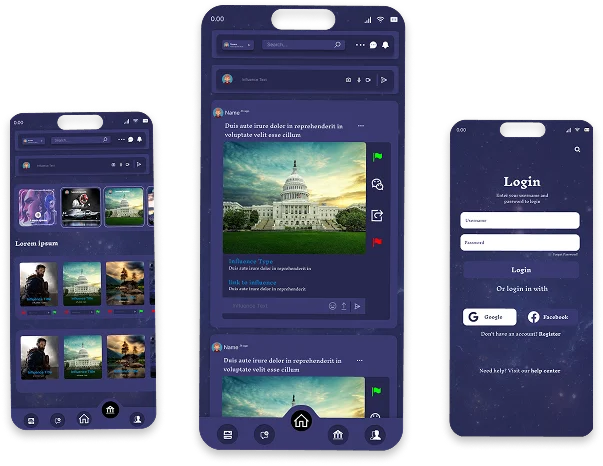
Explore knowledge, stories, and art far beyond your current awareness through recommendations of content others believe is worth choosing.
Consider what content has shaped you most.
Any form of content: books, videos, articles, films, and more
Choose one that you most want others to experience.
Explain why the piece of content you chose is meaningful to you.
Together, your suggestion and explanation form a post
Discover worthwhile content through others' posts.
Choose which content you’ll pursue next.
Use each explanation to inform your decision.
Explore others’ posts in the weekly newsletter
Create an account below to receive the newsletter.
Each person can recommend a single piece of content of any medium. It should be something deeply meaningful, content that has impacted you most, not merely something good you saw recently.
After choosing, you’ll write about why the piece is meaningful to you and worthwhile for others to experience.
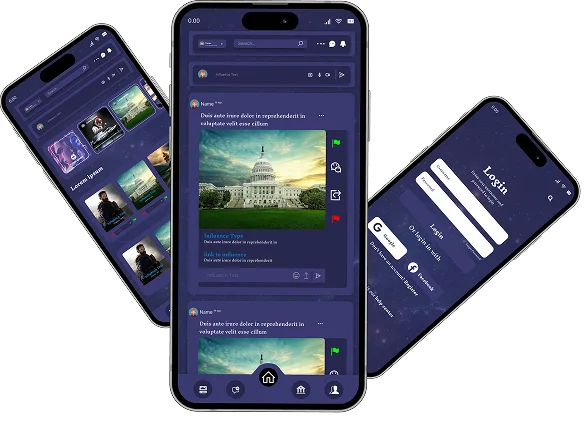
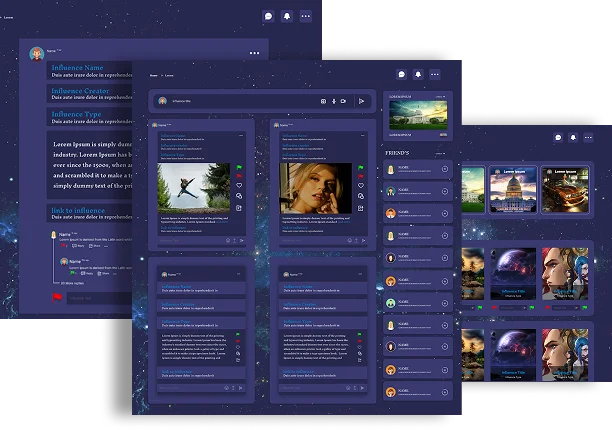
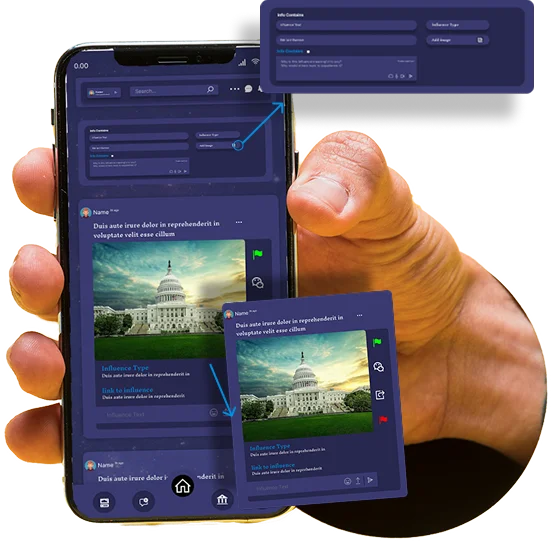
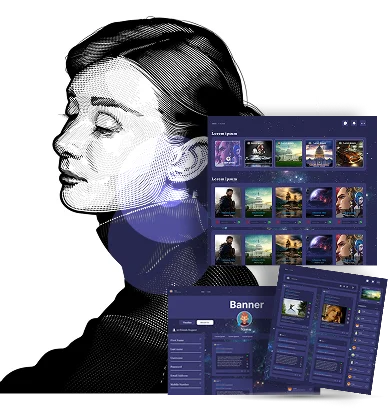
On the real Wonder app, you’ll have a feed that gives you posts consisting of the recommended content and an explanation of why that content was meaningful to the poster. For now, the feed is a weekly newsletter, which will contain a post that someone submits in the “Make a Post” section below.
Have you ever finished a book and felt grateful you found it?
Is there a story you continue to draw inspiration from?
What have you learned, what do you believe, and what has shaped you that you wish others could experience too?
The impact of what we’ve found inspires us to search for more like it, and makes us wonder what we have not yet found. It urges us to explore. Exploration is not merely venturing into the unknown, it is deliberately choosing one’s path. It is not merely exposing yourself to new content, it is intentionally choosing your content.
The content we choose matters. It shapes what we become. Imagine who you would be without books, TV, social media, academic journals, websites, movies, ads, Youtube, or podcasts. It’s impossible. Content shapes us whether we want it to or not, reinforcing and altering what we believe, what we care about, and what we go on to pursue. More subtly, it shapes what feels normal and what seems possible — even what we consider questioning.
However, we can only select from the miniscule fraction we’re aware of. We rely on external aids – feeds, suggestions, and search algorithms – to select and surface information for us. How these systems surface information determine what we become aware of, which defines and constrains our choices. Our choice of content then shapes who we become. The system that selects our content strongly influences our development, so we should use them carefully.
Social media algorithms are designed to capture our attention, so they show us content that is most easily digested, often burying deeper or more meaningful options. Algorithms appeal to our current opinions, preferences, and assumptions, stifling access to new concepts and perspectives. These new ideas are essential for growth – for content to be meaningful – which is the inspiration to explore in the first place.
Choice requires us to reflect, critically examine what we see, and intentionally decide what to do next. Infinite scroll and other deliberately designed features make reflection extraordinarily difficult, while remaining unaware of how the algorithm picks content or what options exist beyond what you’re shown prevents you from intentionally choosing content. Social media is not designed to help you explore. It is designed to capture your attention, and in the process takes away a powerful opportunity for you to shape who you become.
Wonder exposes you to what you wouldn’t find on your own, not to what you’re familiar with. It prioritizes what people value most instead of what has engaged the most people. Wonder doesn’t give you content, it helps you choose it.
We’re making an app! See how it works
Join the newsletter Reserve your place for launch!
What do you like? Have other ideas? Let us know
All fiction is fodder for the imagination and for empathy, yet why is fantasy special? The short answer is because you love Lord of the Rings (the first high fantasy story). If that doesn’t do it for you, fantasy tends to be done in series, giving more time for characters to develop and you to exist with them. In addition, it allows for parts of the real world to be represented in ways that would be extremely difficult to do otherwise. Furthermore, by needing to discover and figure out the new rules of existence in an unknown world for each fantasy story, it encourages a framing of inquisitiveness, of possibility and curiosity, that you can bring to the real world.
Name of the Wind is one of the most beautiful and moving books I’ve read. If there was another that was clearly more so, I’d recommend that one. The most important part of the book, for me, was in attempting to, and partially succeeding in, understanding Kvothe, the main character. I dearly wished (with moderate success) to be inspired like he was, and to be as perceptive, creative, and expressive. I was also drawn to the open-endedness of his life trajectory, the extent to which he did not take an easy path, a defined path, as I and my peers have largely acquiesced to through first school and then whatever jobs will take us (you can guess my generation). It captures what it can be to face one’s full potential and possibilities, to pursue what one wants despite ambiguity and danger. Simultaneously, through Kvothe’s artistry, the magic of the world, and Rothfuss’ writing, the book hints at what beauty is possible to be discovered and created. I have been inspired by Kvothe. I hope you are as well.
Oh, also, this is the first book of a trilogy, and the author released the second book over ten years ago. He’s definitely going to release the third book soon. For sure.
When I was choosing my major for undergrad, I was determined to address climate change to the greatest extent possible. I wanted to understand it, why it was happening and why we were confident in our conclusions, what it would likely cause, and how we could mitigate it. The issue with understanding climate change is that its causes and effects stretch across the entirety of our society. One academic field, much less without graduate school, is utterly insufficient to grasp the issue with as much detail as I wanted. I’m not saying Volts is a substitute for a graduate degree, but it has been invaluable in creating a high level picture to gain awareness of what is being attempted and what is stopping progress.
For those that want a quick rundown about what this “high level” view is, I will give you a high view of the high view. Climate change is caused by greenhouse gases, which are molecules capable of redirecting long wave radiation, acting as a blanket that redirects energy radiating from the surface of the Earth back into itself. Things get warmer. Things get weird in a bad way – as in hundreds of millions of people being displaced (see the 2023 IPCC report) and we lose
tens of trillions of dollars globally over the rest of the century (this is more debated and is incredibly tricky to estimate with confidence, however this estimate seems most likely to me and is reflected in various studies).
This damage is caused by heat, making it biologically untenable to live in regions currently occupied and increasing fatalities from heat stroke, droughts and/or flooding, undermining farming and infrastructure, equatorial diseases expanding their range, sea level rise, and the increasing severity and frequency of storms and wildfires. Climate change will likely cause ecological destruction on the scale of a mass extinction, as most species will be unable to evolve or move quickly enough to adapt, accelerating the current, alarming trends of biomass and biodiversity loss.
Most people don’t really care about nature or realize how dependent we are on its processes to sustain us, so I won’t elaborate here. But, you should check it out if you’re curious! Ask your friendly neighborhood environmental scientist. They are abundant and looking for work. All of these events are what’s most likely in store assuming nothing catastrophic happens, like the West Antarctic ice sheet causing meters of rapid sea level rise. The two major contributors to this problem are CO2, aka carbon dioxide, and CH4, aka methane, aka natural gas.
That’s setting the scene before Volts comes in at all. The first question is where are the emissions coming from? They come from using fossil fuels – generally by burning them – with a couple exceptions. The large buckets are: electricity generation, agriculture, transportation, and industrial/manufacturing processes. Honorable mentions go to leaking methane infrastructure, changing how we use land that once sequestered carbon (this overlaps partly with agriculture), and residential burning of fossil fuels to heat, cook, etc. Okay, David Roberts, time to learn about…everything.
Learning about how we generate, store, and deliver electricity to people is the cornerstone of understanding how to address climate change. Everything hinges on the electrification of our existing processes, substituting current gas consuming vehicles and industrial processes for electricity based systems. We have yet to figure out how to electrify cows. The best solution so far is don’t eat meat. Especially don’t eat meat responsible for 50% of global deforestation – yes, that’s cows. There are well respected estimates that place the cost of electrification as lower than the value of the lives saved (based on their projected productivity, not some morality nonsense) purely by ceasing local exposure to pollution caused by fossil fuels, which are linked to millions of premature deaths across the world annually. That doesn’t count the costs of climate change. To be clear, the health benefits from not using fossil fuels arguably pay for the energy transition by itself. Electrification is a reasonable and achievable pursuit. Volts dives deep into existing, nascent, and potential technologies and companies that could and do make the energy transition possible, the laws, governmental bodies, regulation, and legislation upon which and through things are built, and the surrounding financial, academic, and political players.
I guess put that way it seems like a lot. And it is. If you want a shorter version you can look at Terra.do for how to transition your skills into a climate job, or make your current job a climate job. I think Volts provides an excellent high level view of addressing climate change, exposing and describing all the major parts of the puzzle, enabling a person to dig deeper where and as they wish while having context for the larger picture as they do so. It lets a person picture what we have to do together over the following years, and how you as an individual could play a role.
This book articulates what it means to be free better than any other I’ve read, an idea that moved me to tears once I understood it. It is not an easy read, and I recommend both taking notes and reading the foreword/prologue. I am hesitant to summarize Freire’s ideas here, fearing you might assume my words a sufficient substitute for the actual text, but I will attempt anyway.
Freedom is in the act of consciously shaping who we choose to be and what we choose to do.
This requires having an evolving awareness of ourselves, and therefore conscientização (he’s Brazilian) – meaning to gain awareness of how our society – how life as we observe it – is
shaped by historical, social, political, and economic factors. This political awareness (a translation of conscientização) is not a defined amount of understanding that one attains like a degree, it is the continuous process of engaging critically with one’s reality as we each, and the world, evolve.
Our freedom is ultimately expressed in our actions, in our ability to change the world – in our work.
The wish is for each person to “discover they are creators of culture, that all their work can be creative… I work, and working, I transform the world.” The implication here is that people must perceive their reality “not as a closed world from which there is no exit, but as a limiting situation which they can transform.” In the US we tend to think of freedom as having the time and money to do what we want, yet rarely do we deeply consider what we want and why we want it. This latter is the foundation for freedom.
As you may guess, this idea has large implications for how we educate each other and what the goal of education is. Freire describes a common perspective of how education is implemented that he (and I) take great issue with. He calls it the “banking model,” which is easy to find free descriptions of if you want more detail. The short of it is that the student is believed to be a passive receptacle, that their opinions and thoughts are only valuable so far as they align and emulate that of the teacher. The teacher is assumed to know everything worth teaching, while the student lacks utterly, and must be corrected, not listened to or encouraged to think independently. To this end, the student doesn’t play a part in determining what they learn, they adapt to what the teacher chooses. Whether the teacher is choosing what or how to teach, what behavior is acceptable, or acting in one of the many other ways teachers can interact with their students. The teacher is the sole arbitrator, and enforces their will if the students deviate from it.
From the book: “the teacher confuses the authority of knowledge with his or her own professional authority, which she and he sets in opposition to the freedom of the students…the teacher is the Subject of the learning process, while the pupils are mere objects.”
Even if not strictly practiced to its full degree, this model is adopted in some capacity across nearly all academic institutions. In doing this, students are discouraged from creatively and critically engaging with their own reality, from being curious, to pursue what is meaningful to them – for the pursuit of knowledge to be a natural endeavor in order to better determine what they will do. Instead they are encouraged and forced to conform themselves to another. In many ways, we perceive this as normal and necessary. Is it? Is it always? At what cost?
Have ideas or opinions? Let us know! From features to graphic design to newsletter frequency, we’d like your thoughts.
Subscribing to the newsletter and sharing your feedback is all I ask – if you do I am truly grateful. Beyond that, I’m not an experienced coder, so I’ve been hiring Shawn Williams from Natlogix. His prices are reasonable, but I’ve been asking him to do a lot of work. If you’re overflowing with excitement and gratitude, you can help cover the costs of building the app. Any help is appreciated. (Venmo is Lars-Boddie)